Quarterly Theory: Lý Thuyết Chu Kỳ Quý Của ICT
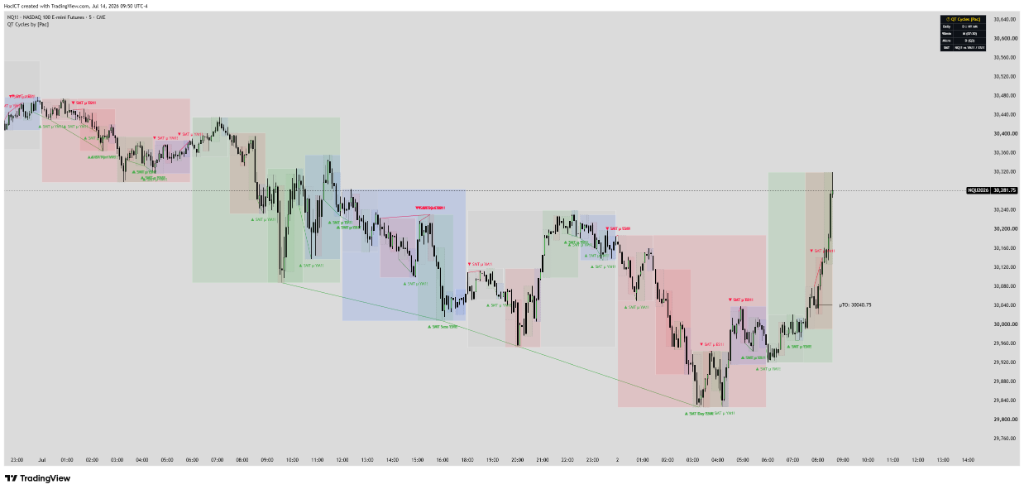
🔍 Quarterly Theory 90-Min Cycles (Q1 - Q2 - Q3 - Q4)
Quarterly Theory (Lý Thuyết Quý) là học thuyết thời gian nâng cao trong ICT, chỉ ra rằng cấu trúc thời gian của thị trường vận hành theo một nguyên lý toán học đồng dạng tự lặp (Fractal). Cụ thể, mọi chu kỳ thời gian (năm, tháng, tuần, ngày, giờ) đều được chia thành 4 phần bằng nhau (mỗi phần chiếm 25%), tương ứng với các giai đoạn vận động của dòng tiền lớn: Tích lũy (Accumulation) - Thao túng (Manipulation) - Phân phối (Distribution) - Tiếp diễn hoặc Đảo chiều (Continuation/Reversal).
1. Đặc Tính Hành Vi Của 4 Quý (Q1 - Q2 - Q3 - Q4)
Trong mỗi chu kỳ thời gian bất kỳ, hành vi của thị trường thường diễn ra như sau:
Thị trường di chuyển trong biên độ hẹp (Consolidation), Smart Money gom/phân phối các hợp đồng ẩn.
Xuất hiện cú lừa (Judas Swing) quét thanh khoản. Đỉnh hoặc đáy của toàn bộ chu kỳ thường được tạo ra tại đây.
Xu hướng thực bắt đầu đẩy mạnh mẽ. Đây là giai đoạn giá di chuyển mượt mà nhất hướng đến mục tiêu.
Giá tiếp tục hoàn thành mục tiêu còn lại hoặc đảo chiều thu hồi thanh khoản chuẩn bị cho chu kỳ mới.
2. Sự Phân Chia Chu Kỳ Trên Các Khung Thời Gian
| Chu Kỳ | Q1 (Tích lũy) | Q2 (Thao túng) | Q3 (Phân phối) | Q4 (Cân bằng) |
|---|---|---|---|---|
| Chu kỳ Năm | Tháng 1 — Tháng 3 | Tháng 4 — Tháng 6 | Tháng 7 — Tháng 9 | Tháng 10 — Tháng 12 |
| Chu kỳ Tháng | Tuần 1 | Tuần 2 | Tuần 3 | Tuần 4 |
| Chu kỳ Tuần | Thứ Hai | Thứ Ba / Thứ Tư | Thứ Năm | Thứ Sáu |
| Chu kỳ Ngày | Phiên Á (00:00 - 08:00 NY) | Phiên Âu (08:00 - 12:00 NY) | Phiên Mỹ AM (12:00 - 16:00 NY) | Phiên Mỹ PM (16:00 - 00:00 NY) |
3. Quy Luật Đỉnh/Đáy Tuần (High/Low of Week)
Áp dụng Quarterly Theory trên khung tuần, chúng ta có một quy tắc vô cùng quan trọng:
📌 Thứ Ba hoặc Thứ Tư (Q2) là những ngày có khả năng cao nhất để tạo nên đỉnh cao nhất (High of Week) hoặc đáy thấp nhất (Low of Week) của tuần đó.
📌 Nếu bạn có bias tăng giá (Bullish) cho cả tuần, hãy chờ đợi giá giảm điều chỉnh quét thanh khoản vào Thứ Ba/Thứ Tư để mua được ở mức giá tốt nhất (Discount), đón nhịp tăng mạnh mẽ vào Thứ Năm (Q3).
4. Quarterly Theory Nâng Cao: Hai Biến Thể XAMD & AMDX
Trong thực chiến, Quarterly Theory không chỉ có một kịch bản Q1→Q2→Q3→Q4 cố định. Theo hệ thống Awais_crt (PO3 / MMXM / QT), mỗi chu kỳ có thể vận hành theo 2 biến thể cấu trúc tùy thuộc vào điểm khởi đầu của pha phân phối: XAMD hoặc AMDX.
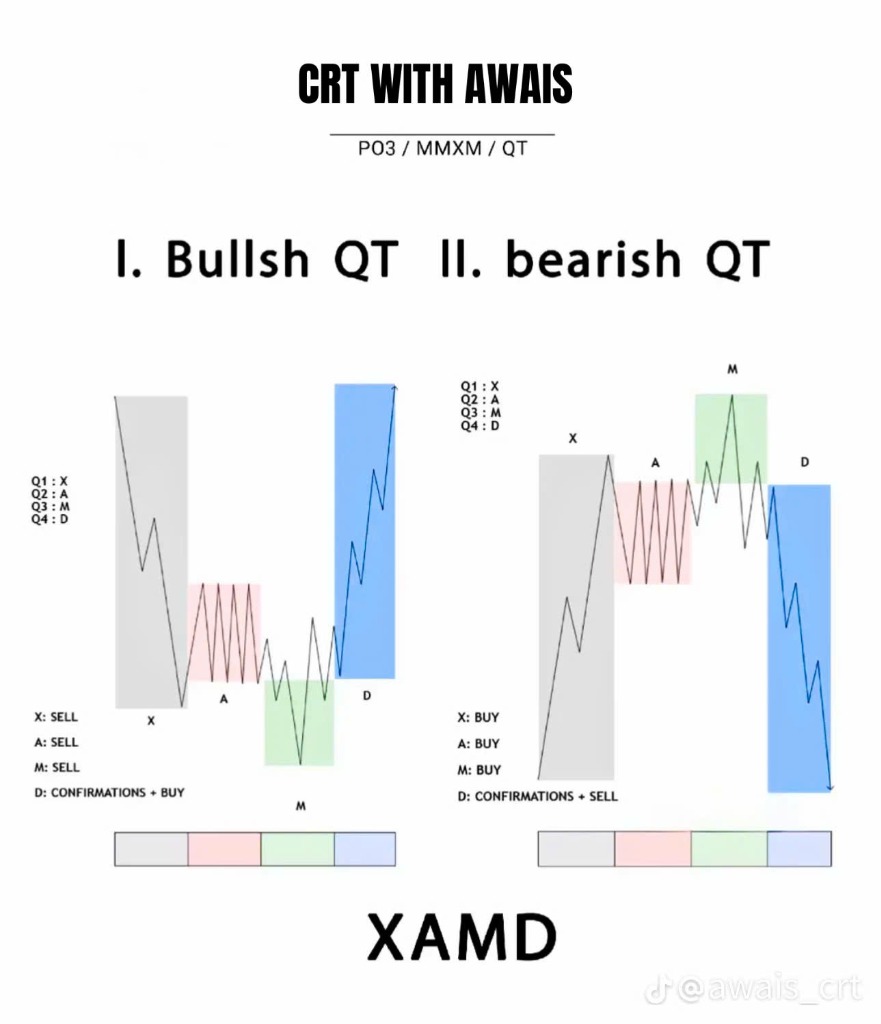
📷 Hình QT.1: Tổng quan 2 biến thể QT — Bullish QT (XAMD): Q1=X bán, Q2=A tích lũy, Q3=M Stop Hunt xuống → BUY tại Q4=D. Bearish QT (XAMD): Q1=X mua, Q2=A tích lũy, Q3=M Stop Hunt lên → SELL tại Q4=D. Ký hiệu XAMD phản ánh cấu trúc phổ biến nhất khi X (eXpansion) xảy ra đầu tiên.
📊 Biến thể 1: XAMD
Chu kỳ bắt đầu bằng X — eXpansion (mở rộng giá ngược chiều để thu gom/phân phối), sau đó Accumulation → Manipulation → Distribution.
Q1 = X — eXpansion (giá mở rộng ngược chiều)
Q2 = A — Accumulation (tích lũy/range)
Q3 = M — Manipulation (Stop Hunt — điểm entry!)
Q4 = D — Distribution (phân phối theo chiều thực)
📊 Biến thể 2: AMDX
Chu kỳ bắt đầu bằng A — Accumulation ngay từ đầu, sau đó Manipulation → Distribution → eXpansion tiếp nối. Phổ biến hơn trong các phiên giao dịch thực tế.
Q1 = A — Accumulation (tích lũy/range)
Q2 = M — Manipulation (Stop Hunt — điểm entry!)
Q3 = D — Distribution (phân phối theo chiều thực)
Q4 = X — eXpansion (mở rộng tiếp hoặc kết thúc chu kỳ)
🔑 Quy tắc bất biến:
Dù là XAMD hay AMDX, pha Manipulation (M) luôn là nơi tạo đỉnh/đáy của cả chu kỳ và là thời điểm tối ưu để vào lệnh. Trader chỉ cần xác định đúng pha M là biết khi nào tìm điểm mua/bán.
5. Bullish Quarterly Theory — Cấu Trúc Tăng Thực Chiến
Bullish XAMD — Tăng Sau Khi X Bán Xuống
Thuật toán bán xuống ở Q1(X) → tích lũy ở Q2(A) → Stop Hunt xuống ở Q3(M) để gom lệnh Buy → tăng mạnh ở Q4(D). Ở đây, Q3 chính là thời điểm tạo đáy tuần/ngày và là điểm vào lệnh Buy tốt nhất.
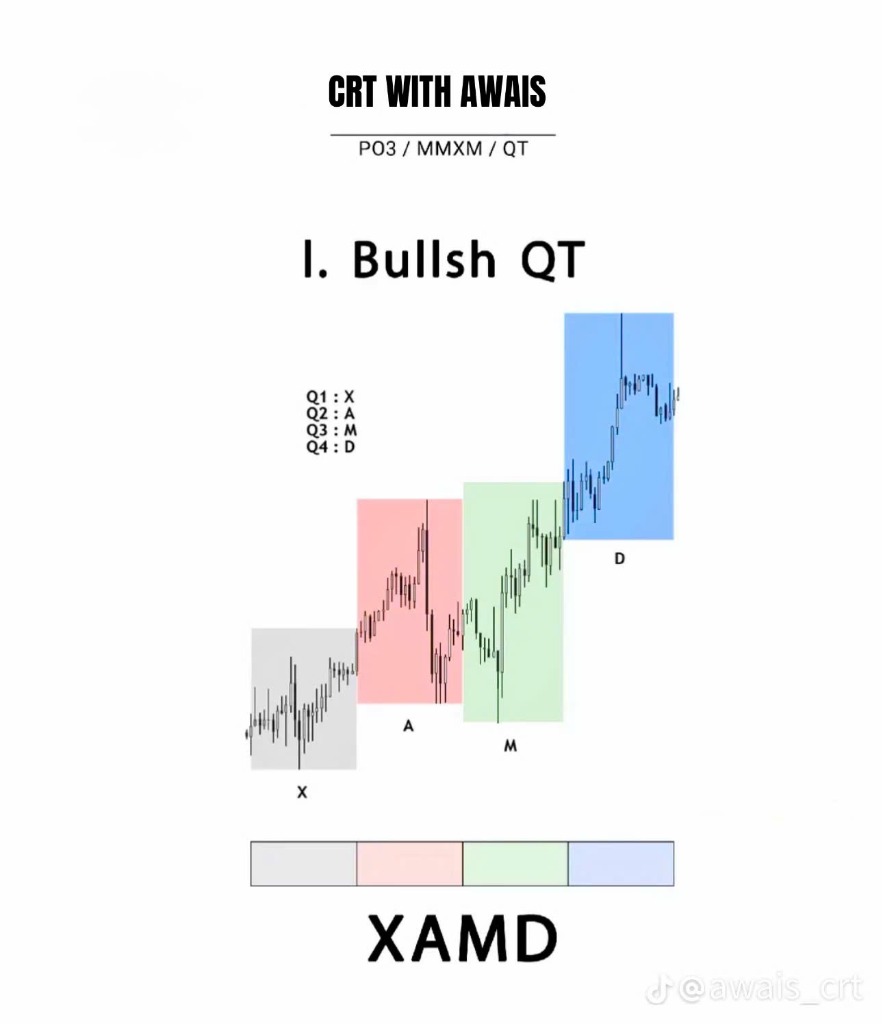
📷 Hình QT.2: Bullish QT — XAMD thực chiến trên biểu đồ nến thực. Q1(X): giá bán xuống tạo vùng Discount. Q2(A): tích lũy, giá đi ngang trong range. Q3(M): Stop Hunt xuống (quét SSL) → điểm vào Buy. Q4(D): giá tăng mạnh về BSL phía trên.
Bullish AMDX — Tăng Sau Khi Tích Lũy Trước
Thuật toán tích lũy ở Q1(A) → Stop Hunt xuống ở Q2(M) → phân phối tăng ở Q3(D) → mở rộng thêm ở Q4(X). Cấu trúc này phổ biến hơn trong các phiên London và New York Open thực tế.
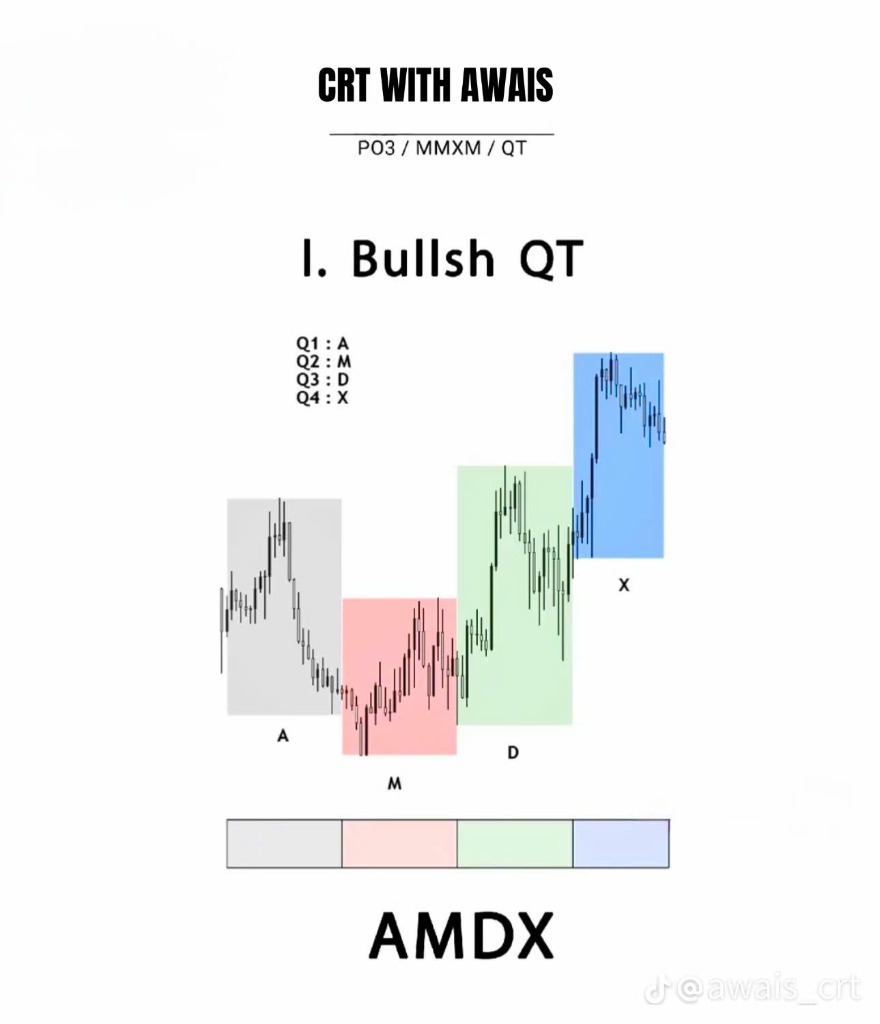
📷 Hình QT.3: Bullish QT — AMDX thực chiến. Q1(A): giá tích lũy trong range hẹp. Q2(M): Stop Hunt xuống (quét SSL) → điểm vào Buy tối ưu. Q3(D): phân phối tăng mạnh về ERL. Q4(X): mở rộng tiếp hoặc chuẩn bị chu kỳ mới.
6. Bearish Quarterly Theory — Cấu Trúc Giảm Thực Chiến
Bearish AMDX — Giảm Sau Khi Stop Hunt Lên
Thuật toán tích lũy ở Q1(A) → Stop Hunt lên ở Q2(M) để gom lệnh Sell → phân phối giảm ở Q3(D) → mở rộng giảm ở Q4(X). Đây là cấu trúc Bearish phổ biến và dễ nhận diện nhất trong thực chiến.
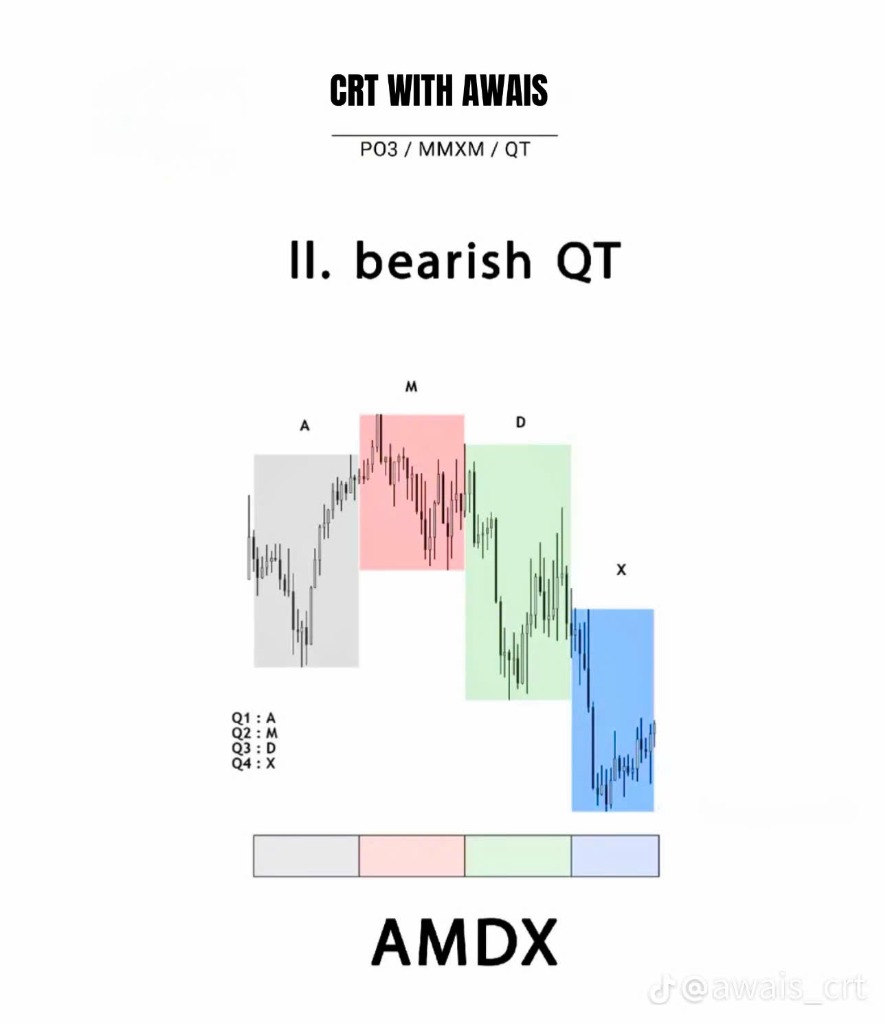
📷 Hình QT.4: Bearish QT — AMDX thực chiến. Q1(A): giá tích lũy trong range. Q2(M): Stop Hunt lên (quét BSL) → điểm vào Sell tối ưu. Q3(D): phân phối giảm mạnh xuống SSL. Q4(X): mở rộng giảm hoặc kết thúc chu kỳ.
| Cấu trúc QT | Q1 | Q2 | Q3 | Q4 | Điểm Entry |
|---|---|---|---|---|---|
| Bullish XAMD | X — Bán | A — Tích lũy | M — Stop Hunt ↓ | D — Tăng | Q3 → BUY |
| Bullish AMDX | A — Tích lũy | M — Stop Hunt ↓ | D — Tăng | X — Mở rộng | Q2 → BUY |
| Bearish XAMD | X — Mua | A — Tích lũy | M — Stop Hunt ↑ | D — Giảm | Q3 → SELL |
| Bearish AMDX | A — Tích lũy | M — Stop Hunt ↑ | D — Giảm | X — Mở rộng | Q2 → SELL |
7. Xây Dựng Daily Narrative Với 3 Killzone: Asia – London – New York
Mỗi ngày giao dịch được chia thành 3 phiên chính tương ứng 3 Killzone. Khi áp dụng Quarterly Theory vào 3 phiên này, trader xác định được vai trò của từng phiên trong chu kỳ ngày — phiên nào là Q1 (Accumulation), phiên nào là Q2/Q3 (Manipulation/Distribution).
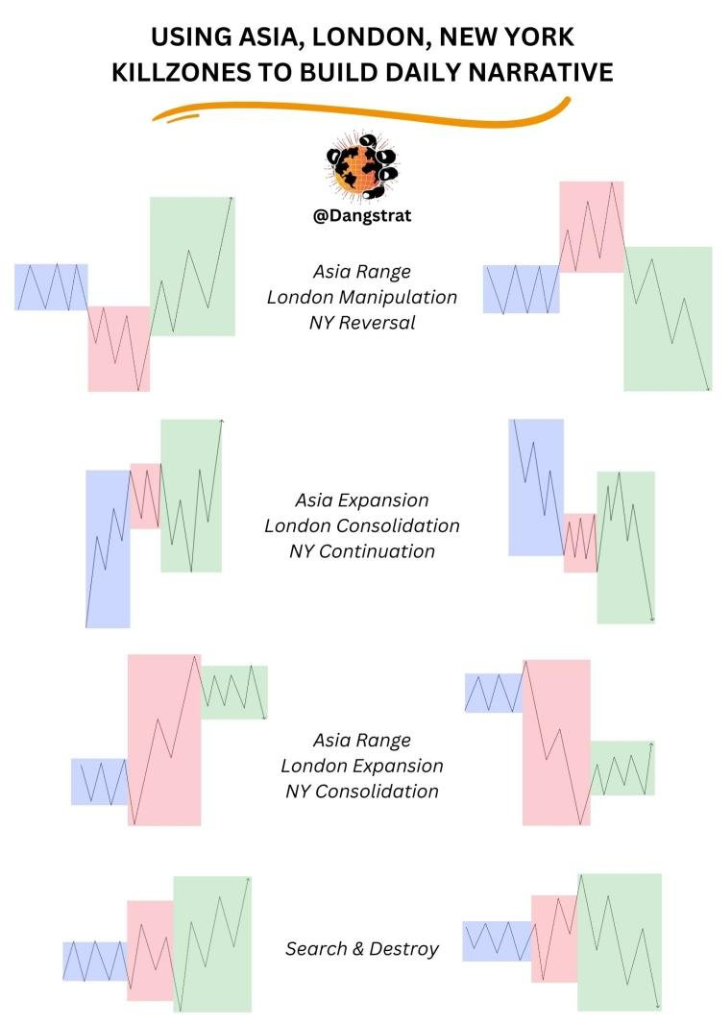
📷 Hình QT.5: 4 kịch bản Daily Narrative (theo @Dangstrat). Mỗi kịch bản phân vai Asia/London/NY theo Q1-Q4, cho phép trader biết phiên nào là Range (tích lũy), phiên nào là Manipulation (điểm vào lệnh), và phiên nào là Reversal/Continuation.
🗓️ Kịch bản 1: Asia Range → London Manipulation → NY Reversal
🌏 ASIA
Q1 — Accumulation
Giá đi ngang hẹp — đánh dấu High/Low Asia
🇬🇧 LONDON
Q2 — Manipulation!
Quét High/Low Asia → Stop Hunt → Entry
🗽 NEW YORK
Q3–Q4 — Reversal/Distribution
Giá đảo chiều — nắm lệnh, TP về ERL
🗓️ Kịch bản 2: Asia Expansion → London Consolidation → NY Continuation
🌏 ASIA
Q1 — X (Expansion)
Giá mở rộng sớm trong Asia
🇬🇧 LONDON
Q2 — A (Consolidation)
Tích lũy trong range — chưa phải Manipulation
🗽 NEW YORK
Q3 — M/D (Continuation)
Stop Hunt đầu NY → Entry → đẩy giá mạnh
🗓️ Kịch bản 3: Asia Range → London Expansion → NY Consolidation
🌏 ASIA
Q1 — A (Range)
Tích lũy — đánh dấu biên độ để chờ Manipulation
🇬🇧 LONDON
Q2 — M (Expansion!)
Phá vỡ Asia Range → Stop Hunt → Entry trong London
🗽 NEW YORK
Q3–Q4 — Consolidation
Đi ngang sau London run — chốt lời, không entry mới
🗓️ Kịch bản 4: Search & Destroy — Ngày Nguy Hiểm!
Giá quét cả 2 phía (BSL và SSL) trong cùng phiên hoặc qua nhiều phiên liên tiếp — không có cấu trúc Q1-Q4 rõ ràng. Thuật toán đang thu gom thanh khoản cả hai phía. Tránh vào lệnh trong ngày Search & Destroy — không xác định được hướng Manipulation.
📌 Cách Đọc Daily Narrative Mỗi Sáng (Checklist):
- Xem phiên Asia: Giá đi ngang (A) hay mở rộng mạnh (X)? → Xác định Q1.
- Quan sát London Open: Có Stop Hunt vào High/Low Asia không? → Nếu có → đây là Q2 (M) → tìm điểm Entry.
- Dự báo NY: Nếu London đã Manipulation → NY sẽ là Distribution (Q3). Nếu London chỉ là Consolidation → NY có thể là Manipulation.
- Nhận diện Search & Destroy: Nếu giá quét cả 2 phía → không giao dịch ngày đó.
Trắc Nghiệm Kiến Thức: Quarterly Theory: Lý Thuyết Chu Kỳ Quý Của ICT
Trả lời 3 câu hỏi trắc nghiệm thực chiến để củng cố kiến thức vừa học.