Rejection Block: Vùng từ chối giá tại các râu nến lớn
🔍 Rejection Block Model: Long Wick Liquidity Rejection
Rejection Block (RB) là vùng giá trị tập trung tại phần râu nến (Wick) của một đỉnh Swing High hoặc đáy Swing Low xoay chiều quan trọng. Đây là nơi ghi nhận sự từ chối giá cực mạnh, nơi thuật toán IPDA kích hoạt các lệnh đối ứng lớn để thanh lý thị trường.
1. Bản Bản Chất Thuật Toán & Cách Xác Định Rejection Block
Khi giá đẩy nhanh về một vùng thanh khoản lớn, Smart Money sẽ nhanh chóng khớp lệnh Limit của họ rồi rút chân tạo râu nến dài. Râu nến này chính là Rejection Block:
- Bullish Rejection Block (RB Tăng): Xác định tại nến đáy Swing Low có râu dưới dài. Đo vẽ từ giá Mở cửa hoặc Đóng cửa (phần thân nến thấp nhất) kéo dài xuống Giá thấp nhất (Lowest Low) của râu nến dưới.
- Bearish Rejection Block (RB Giảm): Xác định tại nến đỉnh Swing High có râu trên dài. Đo vẽ từ giá Mở cửa hoặc Đóng cửa (phần thân nến cao nhất) kéo dài lên Giá cao nhất (Highest High) của râu nến trên.
2. Tại Sao Rejection Block Lại Rất Nhạy Cảm?
Smart Money thường không thể khớp hết 100% lệnh lớn trong một tích tắc rút chân nến đầu tiên. Thuật toán IPDA có xu hướng đẩy giá **quay trở lại retest tối thiểu 50% độ dài của phần râu nến đó** (hoặc chạm vào giá đóng cửa/mở cửa của nến đỉnh/đáy) để khớp nốt các lệnh chờ Limit còn sót lại trước khi thực sự đảo chiều đi xa.
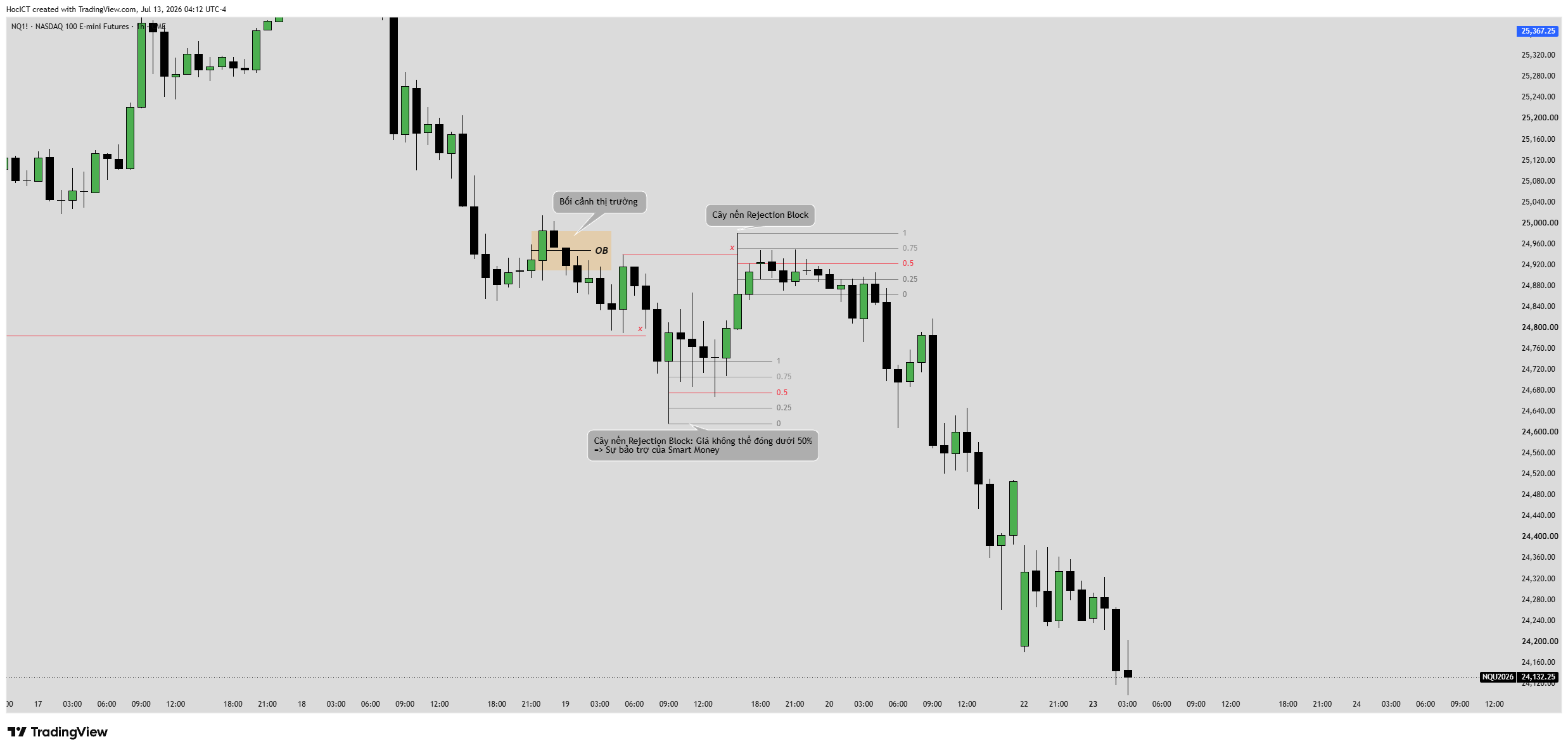
📷 Hình 8.1: Khối lệnh Bearish Rejection Block thực tế trên biểu đồ Nasdaq 1 giờ. Giá hồi quy về retest chính xác vùng râu nến (không đóng nến vượt quá 50% độ dài râu) trước khi sụt giảm mạnh mẽ.
3. Cách Giao Dịch & Quản Trị Rủi Ro
- Điểm Entry tối ưu: Đặt lệnh chờ Limit ngay tại mức giá đóng cửa/mở cửa của thân nến (điểm bắt đầu của râu) hoặc tại mức 50% độ dài của râu nến.
- Điểm Stop Loss (SL): Đặt dừng lỗ cách giá cao nhất/thấp nhất (đầu râu nến) một vài pip. Điều này mang lại tỷ lệ R:R cực kỳ tối ưu vì khoảng dừng lỗ ngắn hơn nhiều so với việc chờ giá tạo OB mới.
- Bộ lọc râu nến chất lượng: Chỉ chọn các Rejection Block ở các đỉnh/đáy cấu trúc lớn (H4/D1) hoặc khi râu nến đó rõ ràng quét qua các mốc thanh khoản BSL/SSL quan trọng. Tránh râu nến nhỏ trong giai đoạn thị trường đi ngang không xu hướng.
Trắc Nghiệm Kiến Thức: Rejection Block: Vùng từ chối giá tại các râu nến lớn
Trả lời 3 câu hỏi trắc nghiệm thực chiến để củng cố kiến thức vừa học.