Propulsion Block: Khối Lệnh Kích Đẩy Của Smart Money
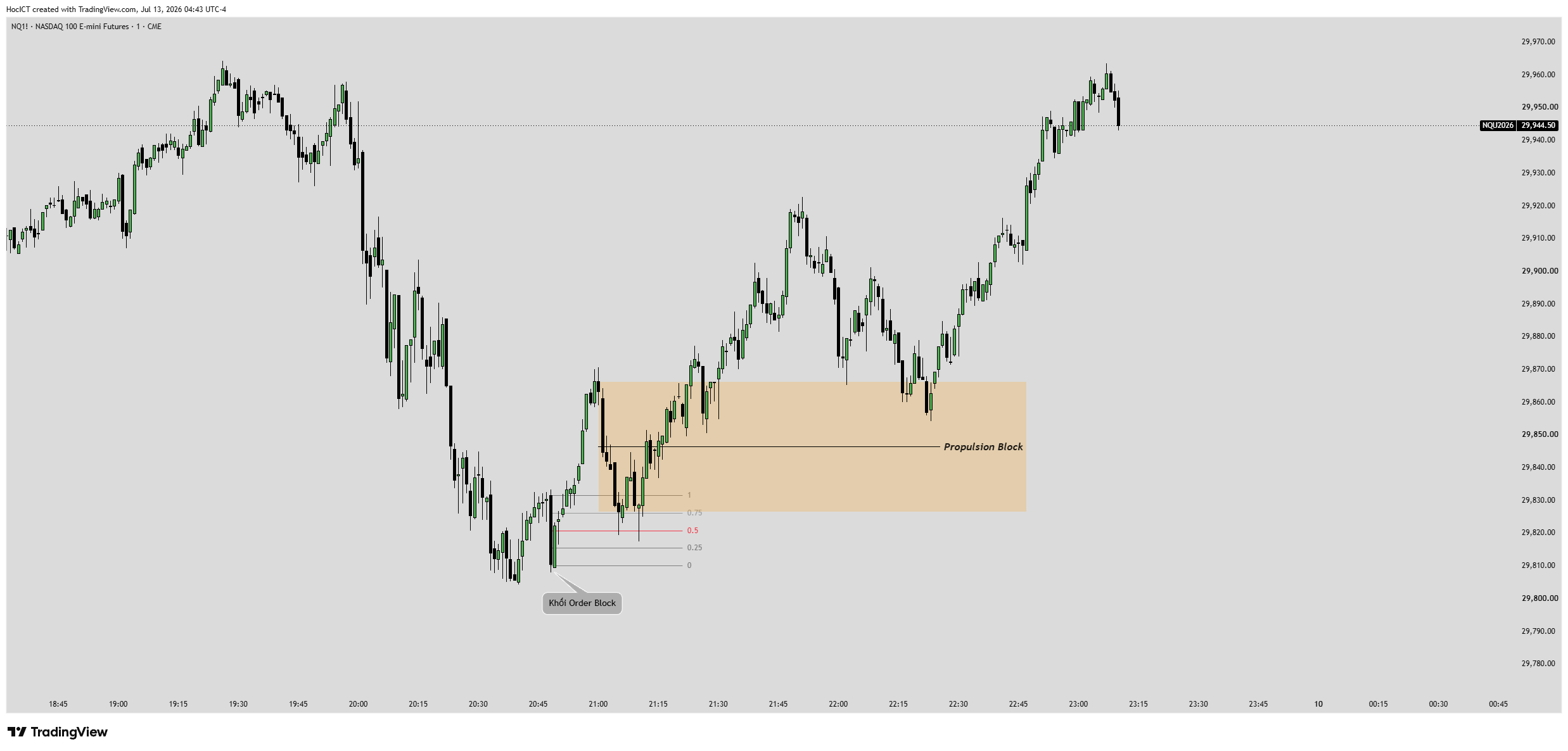
🔍 Propulsion Block Model: Trend Acceleration Engine
Trong phương pháp ICT, Propulsion Block (Khối lệnh kích đẩy) là một dạng Order Block (OB) đặc biệt có xác suất thắng cực cao và lực đẩy giá vô cùng mạnh mẽ. Nó xuất hiện khi một khối Order Block ban đầu bị kiểm tra (Retest) bởi một khối Order Block thứ hai được hình thành ngay sau đó.
1. Cơ Chế Hình Thành Propulsion Block Chi Tiết
Quá trình hình thành một Propulsion Block diễn ra qua các bước cụ thể như sau:
- Hình thành OB1: Thị trường tạo ra khối Order Block thứ nhất (OB1) và đẩy giá đi mạnh mẽ.
- Hình thành OB2: Giá hồi quy ngắn hạn, tạo ra một khối Order Block thứ hai (OB2). Khối OB2 này di chuyển lùi lại và retest vào vùng giá của OB1.
- Xác lập Propulsion Block: Lúc này, khối OB1 chính thức được gọi là Propulsion Block. Khối OB2 đóng vai trò là "ngòi nổ".
- Phản ứng đẩy giá: Trong tương lai, khi giá quay lại retest OB2 một lần nữa, giá sẽ phản ứng cực kỳ nhạy bén tại đây và bật đi ngay lập tức.
📷 Hình 11.1: Khối lệnh Propulsion Block thực tế trên biểu đồ Nasdaq. OB1 đóng vai trò là Propulsion Block khi bị retest bởi OB2. Vị thế Mua được kích hoạt khi giá hồi quy về retest OB2 một lần nữa, tạo lực đẩy giá tăng cực mạnh.
2. Quy Tắc Giao Dịch & Quản Trị Rủi Ro Propulsion Block
Khi giao dịch với Propulsion Block, trader bắt buộc phải tuân thủ:
- Điểm vào lệnh (Entry): Đặt lệnh Limit tại biên trên của khối OB2 hoặc tại giá mở cửa của OB2 khi giá hồi quy về retest.
- Ngưỡng vô hiệu hóa (Stop Loss - SL): Đặt dừng lỗ (SL) tại điểm 50% (Consequent Encroachment - CE) của khối OB1 (Propulsion Block). Nếu giá đóng cửa nến dưới mức 50% CE của OB1, thiết lập này hoàn toàn bị vô hiệu vì lực đẩy của dòng tiền lớn đã yếu đi.
- Lọc Propulsion rác: Chỉ sử dụng thiết lập này nếu OB1 và OB2 đồng pha xu hướng và được sinh ra sau một pha quét thanh khoản lớn ở khung thời gian chính (HTF).
Trắc Nghiệm Kiến Thức: Propulsion Block: Khối Lệnh Kích Đẩy Của Smart Money
Trả lời 3 câu hỏi trắc nghiệm thực chiến để củng cố kiến thức vừa học.