IRL & ERL: Thanh Khoản Nội Vùng và Ngoại Vùng
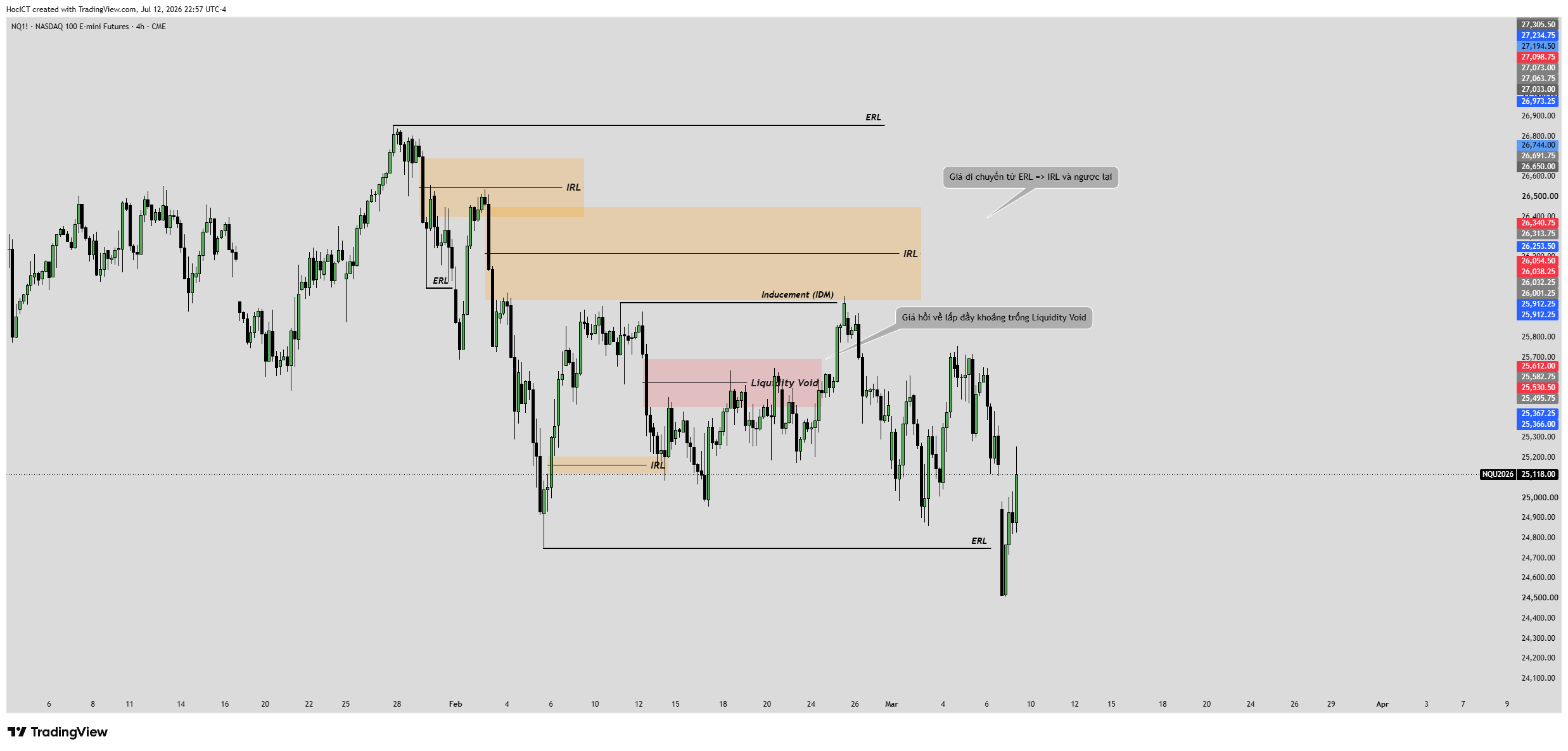
🔍 Internal Range (IRL) & External Range Liquidity (ERL)
Một trong những nguyên lý cốt lõi của IPDA là giá luôn luôn di chuyển từ loại thanh khoản này sang loại thanh khoản khác. IRL và ERL là hai "điểm đến" mà thuật toán hướng tới theo chu kỳ luân phiên, và hiểu được sự luân chuyển này chính là chìa khóa để dự báo giá.
1. Định Nghĩa Chi Tiết
🔵 IRL — Internal Range Liquidity
Thanh khoản bên trong một vùng swing (nằm giữa đỉnh và đáy gần nhất). IRL bao gồm:
- Các vùng FVG (Fair Value Gap) chưa được lấp đầy.
- Các OB (Order Block) chưa bị retest.
- Các Volume Imbalance bên trong nhịp sóng.
- Điểm Equilibrium (50%) của nhịp sóng hiện tại.
🔴 ERL — External Range Liquidity
Thanh khoản bên ngoài biên vùng swing — nằm ở các đỉnh/đáy Swing lớn hơn. ERL bao gồm:
- Các BSL (Buy-side Liquidity) trên đỉnh cũ.
- Các SSL (Sell-side Liquidity) dưới đáy cũ.
- Các Equal Highs/Equal Lows lớn.
- Đỉnh/đáy tháng, tuần, hàng ngày trước đó.
Chu kỳ IPDA: ERL → IRL → ERL (giá đi từ đỉnh đáy lớn về FVG bên trong rồi lại đi tiếp)
2. Nguyên Tắc Luân Chuyển IRL ↔ ERL
Thuật toán IPDA luôn vận hành theo một chu kỳ có thể dự đoán được:
- Giá đang tại ERL (đỉnh hoặc đáy lớn bên ngoài). Tiếp theo nó sẽ hồi về IRL (các vùng FVG/OB bên trong để rebalance).
- Sau khi lấp đầy IRL, giá lại hướng tới ERL tiếp theo (đỉnh/đáy lớn hơn bên ngoài) để quét thanh khoản.
- Chu kỳ ERL → IRL → ERL → IRL lặp lại liên tục ở mọi khung thời gian.
🎯 Ứng dụng:
Khi giá vừa quét xong một ERL (đỉnh/đáy lớn), hãy tìm kiếm các vùng IRL (FVG/OB gần nhất theo hướng đối diện) để đặt Take Profit hoặc tìm điểm vào lệnh theo xu hướng ngược.
Trắc Nghiệm Kiến Thức: IRL & ERL: Thanh Khoản Nội Vùng và Ngoại Vùng
Trả lời 3 câu hỏi trắc nghiệm thực chiến để củng cố kiến thức vừa học.